

Welcome. If this is your first time on this site, you might not know where to start. There are over seventy source summaries, twenty-six posts, and a number of long pages. That is a lot to take in all at once.
This page provides a reading order. Five posts, totaling about an hour’s read, that give you a good introduction to the rest of what can be found here. They are not the easiest, nor the hardest, but together they form a mini-course that puts the basic concepts in their place.
[Text continues below the image…]
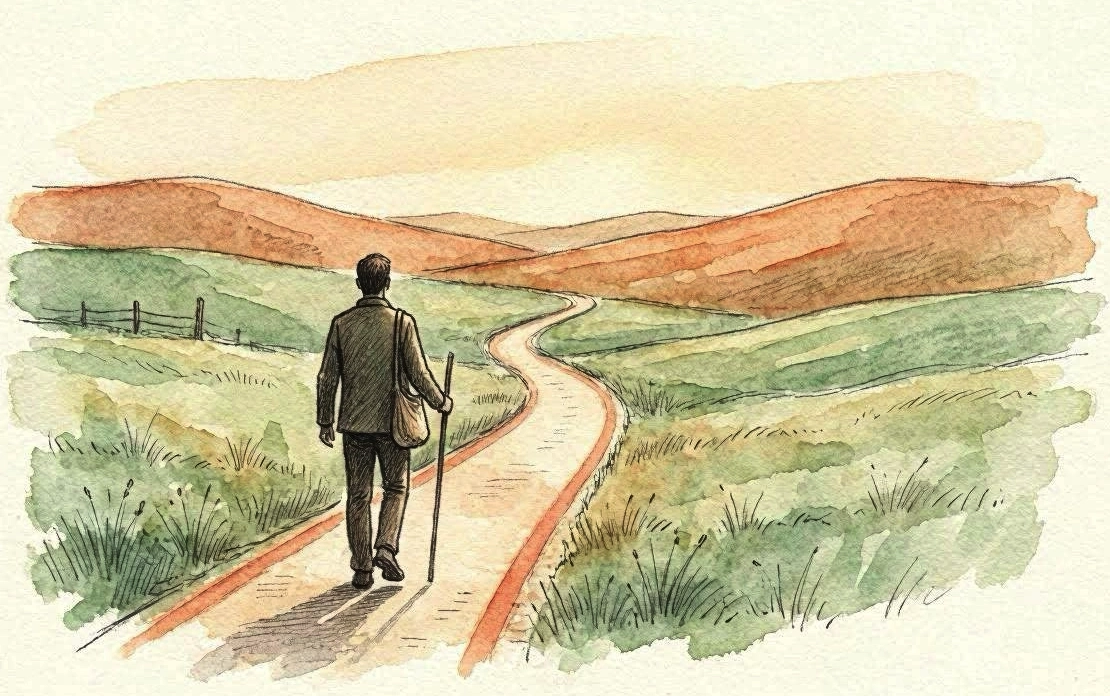
A learning path in five steps#
1. What is the difference between PTSD, CPTSD, and moral injury?#
First, the names. PTSD, complex PTSD, and moral injury sound similar but do not mean the same thing. This post clearly explains the difference, with examples from professions where people frequently encounter this pain. Those who know the terms can better articulate what is going on.
→ Read: Difference between PTSD, CPTSD, and moral injury
2. Head, heart, and gut: three brains, one person#
A framework. Head, heart, and gut function as three systems that ideally work together, but often become disconnected during trauma. This is the neuroscientific translation of an age-old insight and the recurring theme of almost every other post.
→ Read: Three Brains, One Human
3. Trauma and the Body: How the Body Holds Memories#
The core hypothesis. Trauma is not just in your head. It is in your nervous system, your posture, your breathing. This post explains why talking alone often doesn’t help, and why working with the body plays a central role in modern trauma recovery.
4. In the Moment#
A first practical entry point. How does the world enter us and how do we react to it? The Law of Four (Gurdjieff/Ouspensky) explains the cycle between body, emotion, and thought — and what trauma does to it.
→ Read: At the moment itself: the Law of Four and what trauma does to you
5. Post-traumatic growth#
Finally, a hopeful perspective. Trauma can hollow out a person, but research shows that it can also lead to forms of growth. Not despite, but through the rupture. Not easy positivity: a sober overview of what post-traumatic growth is, and what it is not. → Read: Post-traumatic growth
Next#
From here you can go in different directions:
- for in-depth articles: the Blog — all posts, with themes such as daily rhythm, silence, neuroplasticity, moral injury, and more
- for the philosophical framework: The Fourth Way — the path where many of these insights converge
- for the scientific substantiation: Sources — more than seventy book and article summaries, organized thematically
- for who I am: About me
- for the purpose of this site: About this website
A final word#
Read at your own pace. Nothing needs to be read all at once. Some posts need time to sink in. Some posts only become relevant when a certain phase of life calls them up.
How do you pick up the thread of your old life again? How do you move on when you begin to understand deep in your heart that you can no longer go back? There are things that time cannot heal. Some wounds are too deep and permanent.
— J.R.R. Tolkien, based on The Lord of the Rings: The Return of the King
Questions or a comment? Contact us.