

Cortisol Unmasked: The Stress Hormone as Ally and Warning Signal#
On social media, cortisol is often portrayed as the enemy. Supposedly it causes belly fat, destroys sleep, disrupts hormones, and sends the nervous system into chaos. Then comes the solution: detoxes, hacks, supplements, or a morning routine that promises to fix everything.
But the body is not a slogan.
Cortisol is not a flaw in the system. Without cortisol, you would not get out of bed in the morning. Without cortisol, you could not respond to danger. Without cortisol, your energy regulation would collapse.
At the same time, long-term dysregulation of cortisol and the stress system can place a heavy burden on body and mind. This is where nuance matters. Not demonizing, but understanding.
What is cortisol?#
Cortisol is a hormone produced in the adrenal cortex. Its release is regulated through the HPA axis: hypothalamus, pituitary gland, and adrenal glands. As soon as the brain detects stress or increased demand, this axis becomes activated.
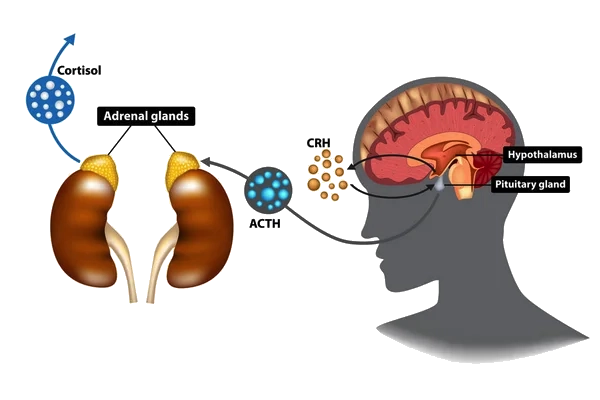
Cortisol helps with releasing energy, regulating blood sugar, increasing alertness, influencing inflammatory responses, supporting blood pressure, and adapting to stress and demand. It is therefore not an enemy, but a regulatory mechanism.
The natural daily rhythm of cortisol#
Cortisol is meant to fluctuate throughout the day. In the first 30 to 45 minutes after waking, it usually rises sharply. This is called the cortisol awakening response.
That morning peak helps with waking up, mental sharpness, mobilizing energy, and the transition from sleep to activity. Later in the day, cortisol normally declines gradually.
When this rhythm becomes disrupted, people may feel exhausted, restless, or dysregulated.
What does a dysregulated stress system feel like?#
Not everyone notices cortisol directly, but many people recognize the pattern: tired and tense at the same time, feeling “on” at night, waking up too early, daytime energy crashes, startling easily, struggling to relax, cravings for sugar or caffeine, and crashing after busy periods.
That does not automatically mean cortisol is the only cause. But it does mean stress regulation deserves attention.
Cortisol and PTSD: more complex than often assumed#
Many people think PTSD simply means permanently elevated cortisol. It is not that simple.
Research shows several different patterns, including:
- lower baseline cortisol levels
- stronger stress reactivity
- disrupted negative feedback
- dysregulated day-night rhythm
In other words: the system can remain hyperalert without cortisol being constantly high.
That helps explain why someone may feel intensely stressed while standard blood tests show little.
Cortisol and sleep#
Cortisol works together with your biological clock and hormones such as melatonin. During the day it supports activity. In the evening it should become lower so that rest and sleep can emerge more easily.
With chronic stress or trauma, this rhythm may shift. The body remains too vigilant.
Possible consequences include difficulty falling asleep, waking frequently, restless sleep, waking too early, and feeling unrefreshed in the morning.
Cortisol and coffee: when it helps and when it backfires#
Caffeine can amplify the alertness response. For some people that is fine. For others, it stacks onto an already activated nervous system.
Drinking coffee immediately after waking may, in sensitive people, bring on nervousness, heart palpitations, shakiness, rapid energy crashes later, and increased restlessness.
A practical experiment: wait 60 to 90 minutes after waking before drinking coffee and see what happens. No dogma. Just test it.
Cortisol, nutrition, and blood sugar#
Cortisol and blood sugar influence each other. When energy availability is low, cortisol helps release glucose. Large fluctuations in blood sugar can intensify stress responses.
What often helps: eating regularly, getting enough protein, fiber-rich meals, fewer spikes from fast sugars, and staying hydrated. No perfect diet required. Just more stability.
Cortisol and body weight#
Chronic stress is associated with changes in appetite, fat storage, sleep, and movement patterns. Because of that, weight gain may occur, especially around the abdomen.
But saying “cortisol makes you fat” is too simplistic.
Usually a combination of factors is involved: sleep deprivation, stress eating, less physical activity, energy crashes, hormonal adaptation, and prolonged tension.
Long-term stress and insulin sensitivity#
When the system remains activated for too long, it may become associated with reduced insulin sensitivity and metabolic dysregulation.
This process usually develops over time and involves multiple lifestyle and stress-related factors.
People with PTSD more often show metabolic problems. That is not a lack of discipline, but often a physiological burden that deserves to be taken seriously.
How can you support recovery?#
Not with hacks, but with rhythm.
1. Morning light#
Daylight helps regulate your biological clock.
2. Regular sleep#
Consistent sleep schedules are more powerful than occasional perfection.
3. Movement#
Walking and strength training support regulation.
4. Breathing and relaxation#
Longer exhalations, moments of rest, and recovery pauses help the system settle.
5. Stable nutrition#
Fewer spikes, more consistency.
6. Treat the trauma#
With PTSD, psychological or body-oriented treatment is often essential.
7. Limit alcohol#
Alcohol disrupts sleep and recovery more than many people realize.
What does not help#
Obsessively trying to lower cortisol does not help. Neither does pathologizing every bodily signal, chasing supplements without the basics in place, ignoring chronic sleep deprivation, living on caffeine and sugar, or believing willpower alone will solve everything.
Read also#
- Breathing and PTSD
- Daily rhythm and PTSD
- Trauma and the body
- Silence and PTSD
- The healing power of nature in PTSD
Conclusion#
Cortisol is not the enemy. It is an intelligent link between brain, body, and environment. The problem is usually not cortisol itself, but a system that has been under pressure for too long.
The goal is therefore not to eliminate cortisol, but to restore rhythm. More light, more sleep, more regulation, less chronic overload.
No magic. Just biology.