

PTSD is often described in terms of memory, triggers, and the nervous system. Moral Injury goes one layer deeper: not only what someone experienced, but what it did to their sense of who they are. People describe it as a rupture in meaning. A loss of trust. A feeling that the old story no longer fits.
In experiences like these, psychological language sometimes falls short. Not because that language is wrong, but because it was designed to grasp something that, by its nature, resists being fully grasped. That is where space opens for another kind of language: poetry, imagery, rhythm, story.
The work of Jalal ad-Din Muhammad Rumi (1207–1273) is one example. His verses appear in therapy rooms, retreats, and grief processes. Not because he offers simple answers — quite the opposite — but because he leaves room for what cannot be solved.
Who was Rumi?#
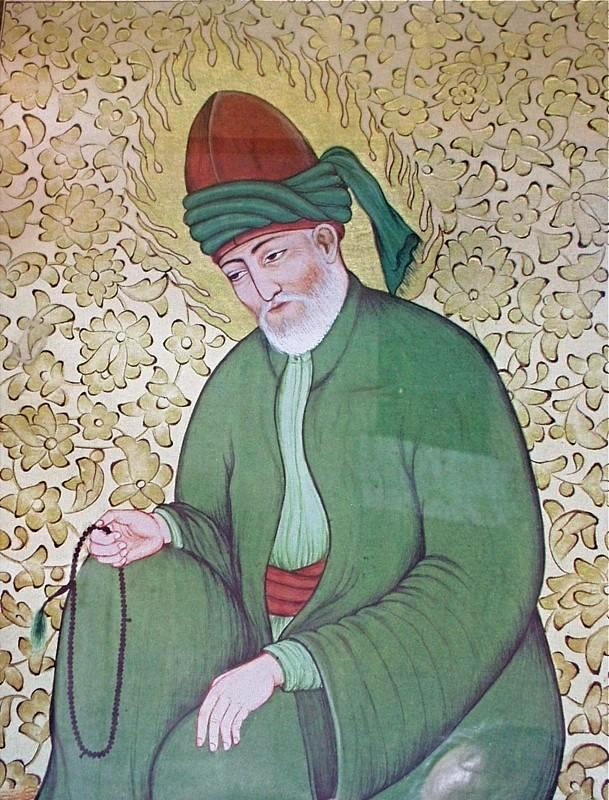
Jalal ad-Din Muhammad Rumi was born in 1207, most likely in Balkh, in present-day Afghanistan. His family fled westward from the advancing Mongol armies and eventually settled in Konya, in present-day Turkey. Displacement and loss were not abstract themes in his life — they were the reality in which he grew up.
At first, Rumi was not a poet. He was a respected Islamic scholar: jurist, theologian, teacher, religious leader. Someone with status. Someone with a clear story about who he was and what he did.
That story stopped making sense after his encounter with the wandering mystic Shams of Tabriz.
The meeting — and the loss of Shams#
Biographies describe that meeting as a turning point. Shams confronted Rumi with a simple but unsettling question: are you truly living what you teach? From that moment on, Rumi changed. The orderly scholar began writing poetry, making music, and entering mystical experience instead of remaining only within religious knowledge.
And then Shams disappeared.
He was likely murdered, possibly because of tensions within Rumi’s own environment. Historians still debate the details, but for Rumi the loss felt like an existential rupture. Much of what he wrote afterward emerged from that wound — not about it, but through it.
Moral Injury: when the moral compass breaks#
Moral Injury is not a DSM diagnosis, but a concept increasingly used in research on war, policing, healthcare, and crisis situations. Researchers such as Jonathan Shay and Brett Litz describe it as an inner rupture that occurs when someone does something that violates deeply held values, witnesses moral violations, or feels betrayed by authorities or people they trusted.
The result is often not a classic fear response, but guilt, shame, inner alienation, and existential emptiness. A loss of trust: in others, in oneself, in the order of things.
What the loss of Shams meant to Rumi touches the same layer. It was not an abstract setback. It was a hole in his moral and spiritual world. What he wrote afterward was not written from recovery, but from remaining present within the rupture. That is precisely why his work still resonates centuries later with people who have gone through something similar.
What Rumi can show in PTSD and Moral Injury#
It is important to stay clear: Rumi is not a therapeutic method. His poetry does not replace treatment. But his work does offer another perspective — a language that can stand alongside therapy, body-based work, and community.
1. Language for what has no language#
Many people living with trauma recognize this: it is difficult to explain what happened. Not because there are no words, but because the words fall short. Logic cannot fully grasp what actually took place.
Poetry works differently. It does not need to explain. It does not need to solve. It allows what exists to remain and gives it space. For people who feel silenced, that can be deeply liberating: someone else has already spoken these truths. There is a form of recognition in that which even a skilled therapist cannot always provide.
2. Remaining present with what hurts#
Many trauma therapies now recognize that chronic avoidance keeps PTSD alive. People become disconnected from their feelings, bodies, or relationships in order to survive. In the short term, that helps. In the long term, it makes life smaller.
Rumi writes precisely about remaining present with pain. Not analytically, not stoically, but experientially. Becoming still. Listening. Enduring what can be endured. Not escaping into control or numbing.
That does not mean someone should “just feel their trauma.” Without safety, that can be harmful. But within a safe environment, this attitude can support recovery work — not as a replacement, but as an addition.
3. The wound as an opening — without romanticizing#
A widely quoted line often attributed to Rumi says: “the wound is the place where the light enters you.” That sentence is frequently used as if suffering automatically leads to growth. Rumi is not that simplistic.
He does not romanticize pain. What he describes is something more nuanced: sometimes trauma breaks open the illusion of control. Not because that is beautiful, but because the old story can no longer hold.
This connects with what is now called post-traumatic growth. An important nuance remains: growth is not an obligation. Not everyone grows through trauma. And growth does not mean the suffering was “good.” In Rumi’s work, the wound remains visible — that is part of its integrity.
4. Rhythm and the body: the whirling dervishes#
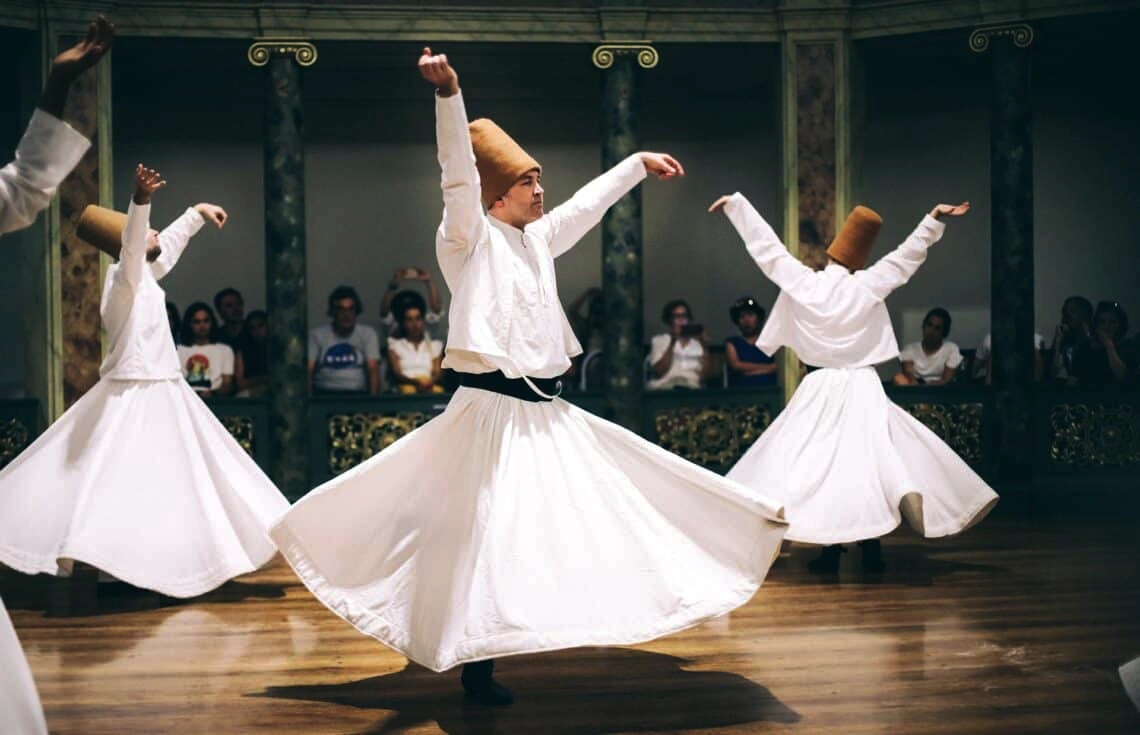
After the loss of Shams, the Mevlevi order emerged from the tradition surrounding Rumi, internationally known through the whirling dervishes. From the outside, it may appear exotic or folkloric. Underneath lies something far more concrete: rhythm, breath, attention, repetition, music, and bodily regulation within safe community.
Modern trauma research increasingly confirms that recovery does not happen through language alone. The autonomic nervous system plays a central role, as shown in Porges’ Polyvagal Theory. Practices involving rhythm and movement in groups can support regulation and integration. Not as miracle cures, but as building blocks.
5. Connection instead of control#
Perhaps this is Rumi’s central theme. Not perfection. Not enlightenment. Not being “fully healed.” But remaining connected: to yourself, to others, to the body, to beauty, to nature, to something larger than the isolated self.
Trauma often narrows life. Shame pulls people inward. Avoidance makes the world smaller. Rumi gently tries to open that narrowing again — not by erasing pain, but by restoring humanity.
What does scientific research say about this?#
The connection between spirituality, meaning, and trauma is being studied more and more. Important insights come from the work of Bessel van der Kolk, who in The Body Keeps the Score describes how trauma becomes embedded in the body and how recovery often happens through experience, rhythm, and relationship — not through conversation alone. Jonathan Shay introduced the concept of Moral Injury in relation to Vietnam veterans and emphasized that recovery from moral injury cannot happen without community. Brett Litz and colleagues later described Moral Injury as a disruption of moral schemas leading to guilt and shame. Kenneth Pargament has extensively studied how religious and spiritual resources can help during overwhelming experiences — or, conversely, block recovery when used to avoid pain.
What stands out in all this is that recovery is not only about symptom reduction, but also about meaning, relationship, and integration. These are precisely the layers for which Rumi has provided language for centuries.
Mysticism as a supporting layer, not a solution#
That distinction matters. Mysticism does not solve PTSD or Moral Injury. Trauma often requires professional treatment, body-oriented therapy, safe relationships, social recognition, rest, nervous system regulation, and sometimes medication or long-term support.
Rumi offers no replacement for that. What his work can offer is language for existential experience, room for paradox, connection with something larger than personal isolation, and a way of rediscovering meaning without denying pain.
For some people, a sense of humanity begins to return there. Not as a reward for “recovering well,” but as a layer that slowly becomes accessible again alongside the recovery process.
Connection after rupture#
What Rumi perhaps shows more than anything else is this: after rupture, you do not first have to become “whole again” before you can reconnect. Connection and vulnerability can exist at the same time.
For people living with PTSD or Moral Injury, that can be an important shift. The belief “I can only participate again once I am healed” often isolates people from the very community that could support their recovery. Rumi turns that around: participation and staying connected are not end goals, but entry points. In that sense, his poetry is not an escape from reality, but an invitation to inhabit it differently.
A personal note: the Pulsar line#
The fact that both Francis of Assisi and Rumi have dedicated posts on this site is no coincidence. Marcel Derkse, the inspiration behind the Pulsar Academy and the translator who brought Rumi’s Masnavi into Dutch, drew from both traditions. For him, Francis and Rumi did not stand opposed to each other, but side by side: two men from the same thirteenth century, from entirely different religious traditions, each showing in their own way how a human being can remain human in vulnerability.
My own introduction to Rumi and Universal Sufism came through that Pulsar line. That is why this post emphasizes the practical, embodied, and relational aspects of mysticism more than purely textual exegesis. Not because the texts are unimportant, but because in the tradition through which I encountered them, they were always connected to living, breathing, practice, and community.
Read also#
- Francis of Assisi and PTSD and Moral Injury
- What is the difference between PTSD and Moral Injury?
- Post-traumatic growth
- Porges’ Polyvagal Theory
- Shame after trauma
- Silence and PTSD
Conclusion: another language for recovery#
Rumi offers no quick answer to PTSD or Moral Injury. What he does offer is another language. A language for loss of identity, fractured connection, inner emptiness, longing, and the search for meaning after disruption.
His work can help create space for what is broken without immediately trying to repair it. Not as therapy, but as an experiential path alongside it. A layer in which the fracture itself is given language.
Perhaps that is why his words still resonate centuries later. Not because they solve trauma. But because they restore humanity where people sometimes feel they have lost themselves.
Sources and scientific publications#
- Van der Kolk, B. (2014). The Body Keeps the Score
- Porges, S.W. (2011). The Polyvagal Theory
- Shay, J. (1994). Achilles in Vietnam - Combat Trauma and the Undoing of Character
- Litz, B. et al. (2009). Moral Injury and Moral Repair in War Veterans. Clinical Psychology Review
- Pargament, K. (1997). The Psychology of Religion and Coping
- Rumi, J. The Masnavi (English translations by Reynold A. Nicholson and Jawid Mojaddedi, among others)
- Rumi, J. The Divan of Shams of Tabriz
- Derkse, M. — Dutch translation of Rumi’s Masnavi; see also The Pulsar Vision
- Schimmel, A. (1993). The Triumphal Sun: A Study of the Works of Jalaloddin Rumi
- Chittick, W. (1983). The Sufi Path of Love: The Spiritual Teachings of Rumi
- Elif Shafak (2010). The Forty Rules of Love
Questions?#
Do you recognize this in yourself or in your work with others? Use the contact form to get in touch with me.