

Some people long for silence and become frightened the moment it appears. That is understandable. For a nervous system accustomed to tension, calmness can feel unfamiliar. Yet this is often exactly where recovery begins.
Silence is not only the absence of sound. It is also less pressure, less reacting, and less overwhelm. A space in which the body can begin to notice that not everything requires an immediate response.
Why silence helps with PTSD#
In PTSD, the alarm system is often tuned too sharply. The body constantly scans for danger. Fewer stimuli can help activation settle down.
Possible effects of silence:
- lower tension
- slower breathing
- greater body awareness
- clearer thinking
- faster recovery after busy periods
Why silence can feel difficult at first#
Many people assume silence should immediately feel pleasant. That is not necessarily true.
Silence can feel confronting because:
- emotions become noticeable
- restlessness becomes visible
- distractions disappear
- the body has to unlearn constant alertness
That is why it is important to begin small and gently.
Personal experience with silence#
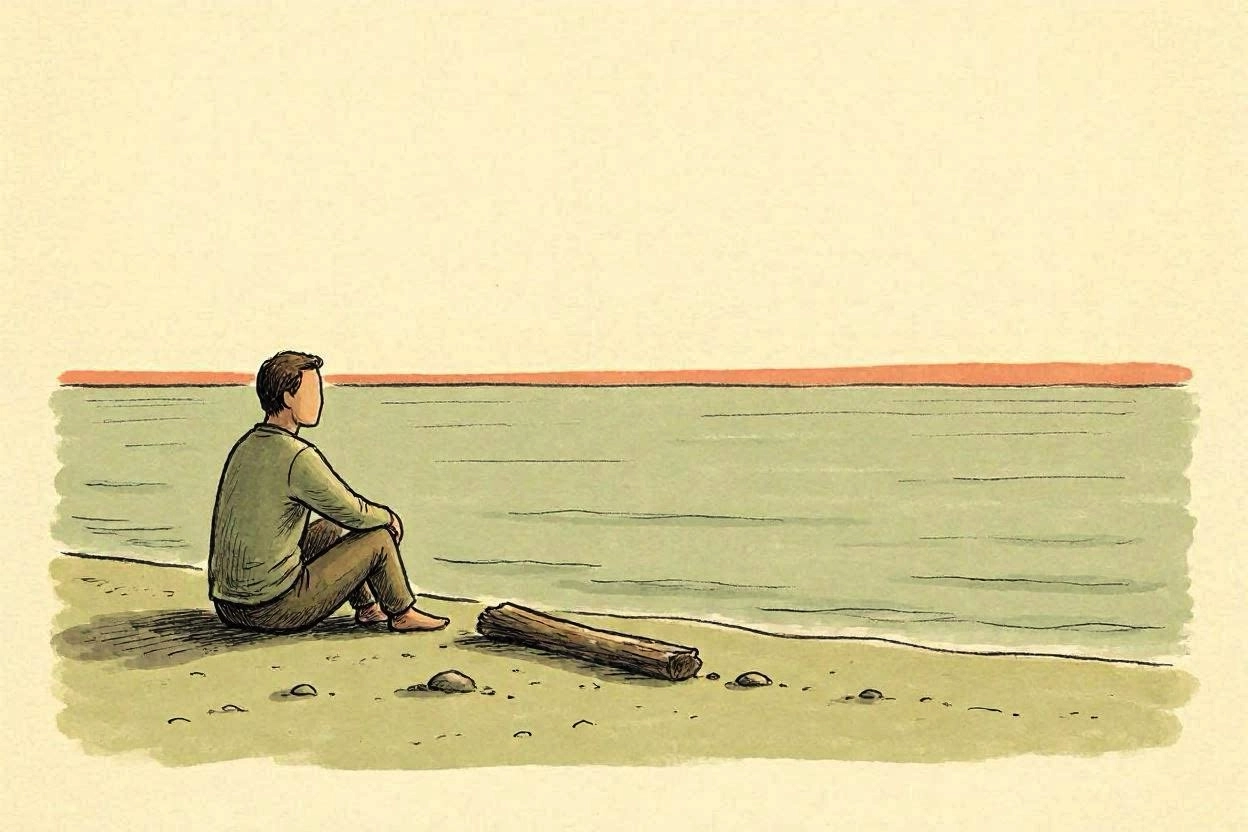
During my training as a change facilitator at the Pulsar Academy, silence was consciously used within the group. At first, it felt uncomfortable, almost unnatural. Not being allowed to speak triggered resistance in me. I felt anger, restlessness, and a stream of thoughts forcing themselves forward as soon as the distraction disappeared.
But over time, something shifted. The struggle slowly gave way to surrender. Beneath the unrest, there turned out to be calmness. When the silence ended, I noticed to my surprise that I longed for it to return.
That experience showed me that silence is not empty. Silence can confront, destabilize, and at the same time deeply nourish.
“You just have to sit still for a while
and wait until the noise in your head stops.”— Erling Kagge, Silence in the Age of Noise
Practical exercises in stillness#
1. Five minutes without input#
No phone, no music, no task. Just sitting and breathing.
2. Listening without searching#
What sounds are already present? Wind, birds, traffic, breathing.
3. Silent walk#
Walk slowly without a goal. Notice your feet and your surroundings.
4. One quiet corner at home#
Create a place without screens where you regularly return and settle.
Silence is not the same as loneliness#
Loneliness disconnects. Silence can reconnect. With yourself, with your body, with what remained present beneath the noise.
Bridge toward nature#
For many people, silence becomes more accessible outdoors. In nature, silence often feels alive rather than empty.
Read also: The Healing Power of Nature in PTSD
Conclusion#
Silence does not have to be grand or perfect. Sometimes recovery begins with three quiet minutes in which nothing is required. In that simplicity, something may return that has long remained distant: presence.